A family-run design-build remodeler across San Francisco and Sacramento. Live since July 2026 and running its automated jobs every day since. Nothing here was configured from a template, and nothing here is a mockup.
Every screen below is the running system, filled with demo data.
One job: a 1924 Spanish revival in San Francisco, taken back to a five-bedroom home. The screens below are the system built around work like this.
Nothing gets written on a napkin
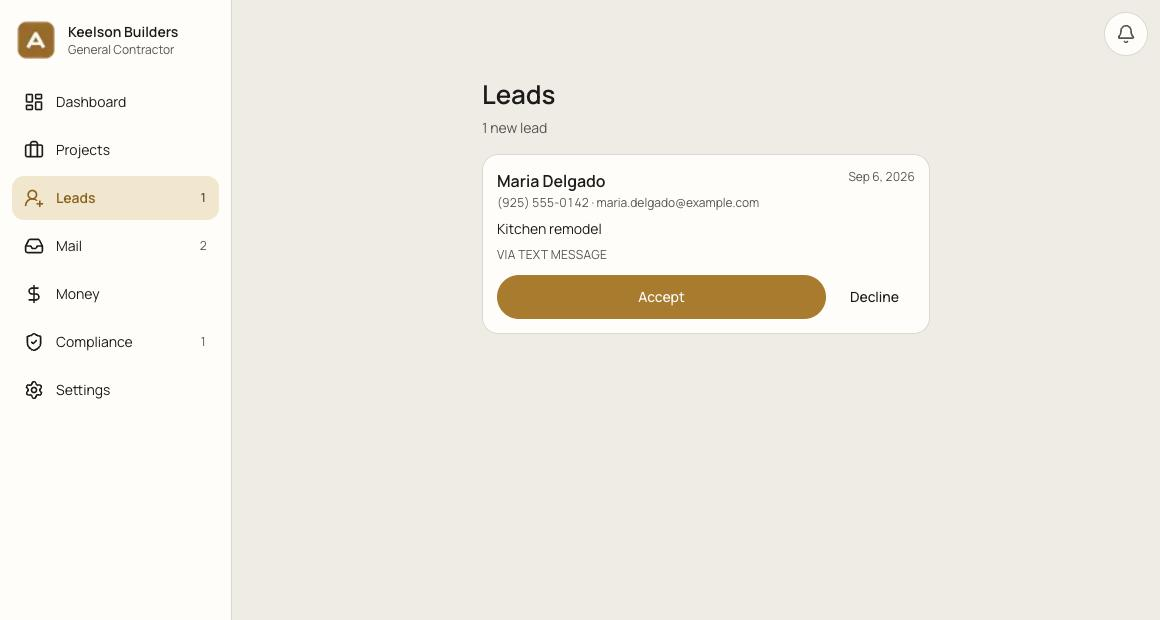
The lead arrives already attached to a customer. Accepting it opens the job, and the estimate starts itself.
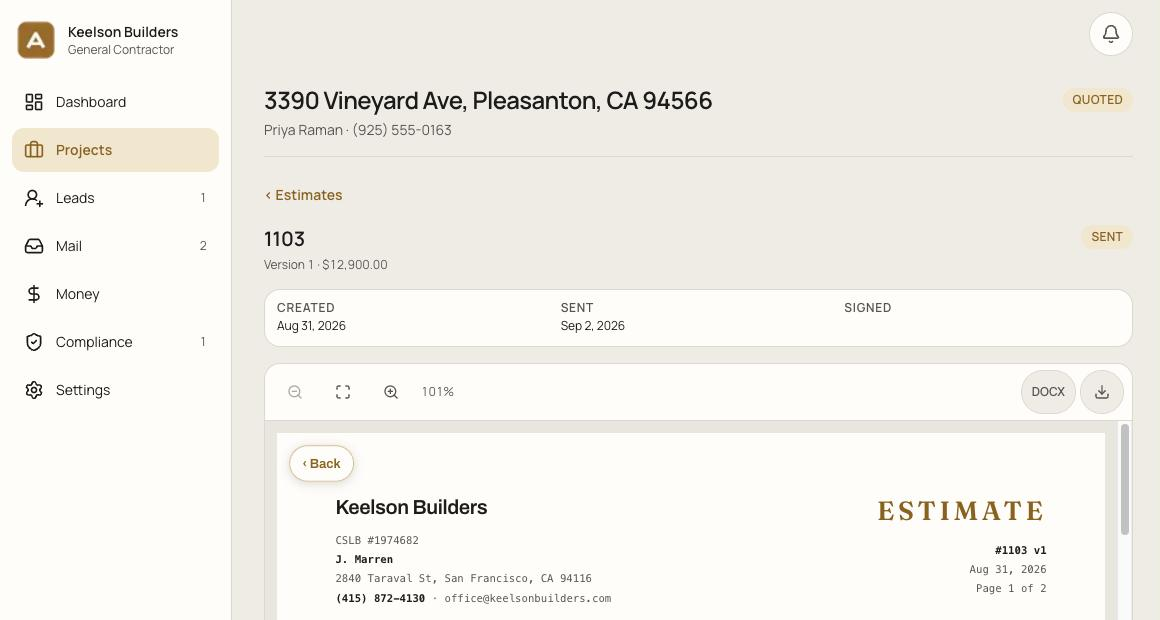
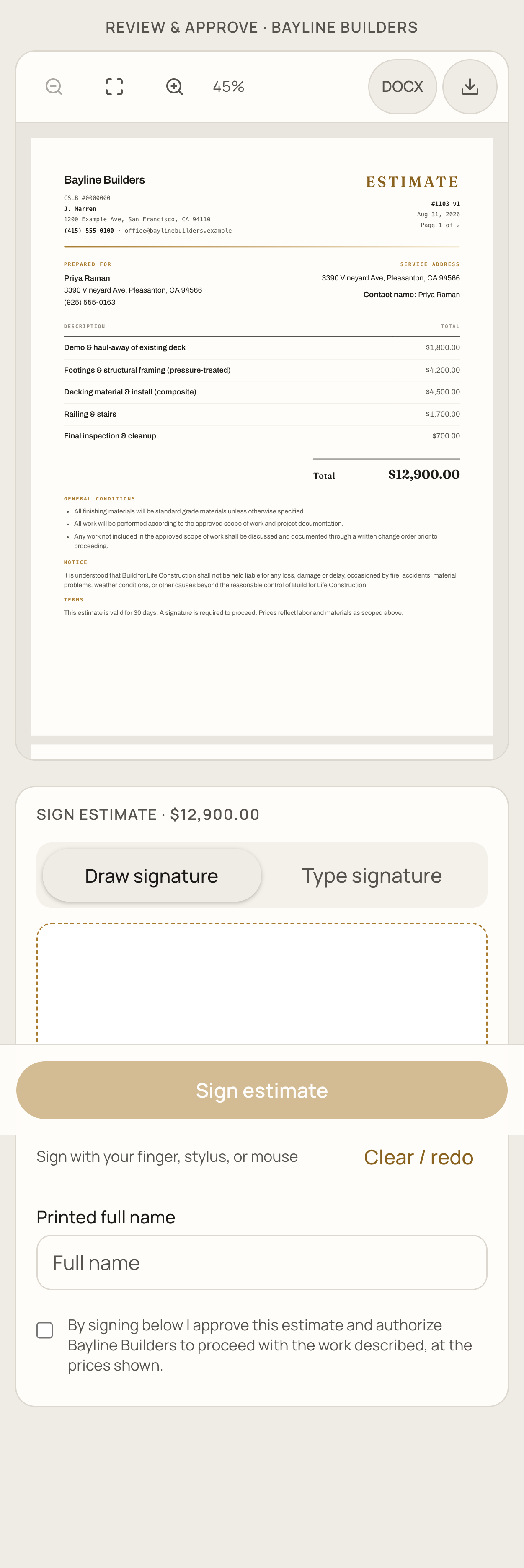
The estimate
Line items come off a price book he set. The document carries his license, his terms and his general conditions, because they are his and not a vendor’s defaults. Nobody can quietly change a price after the customer has seen it.
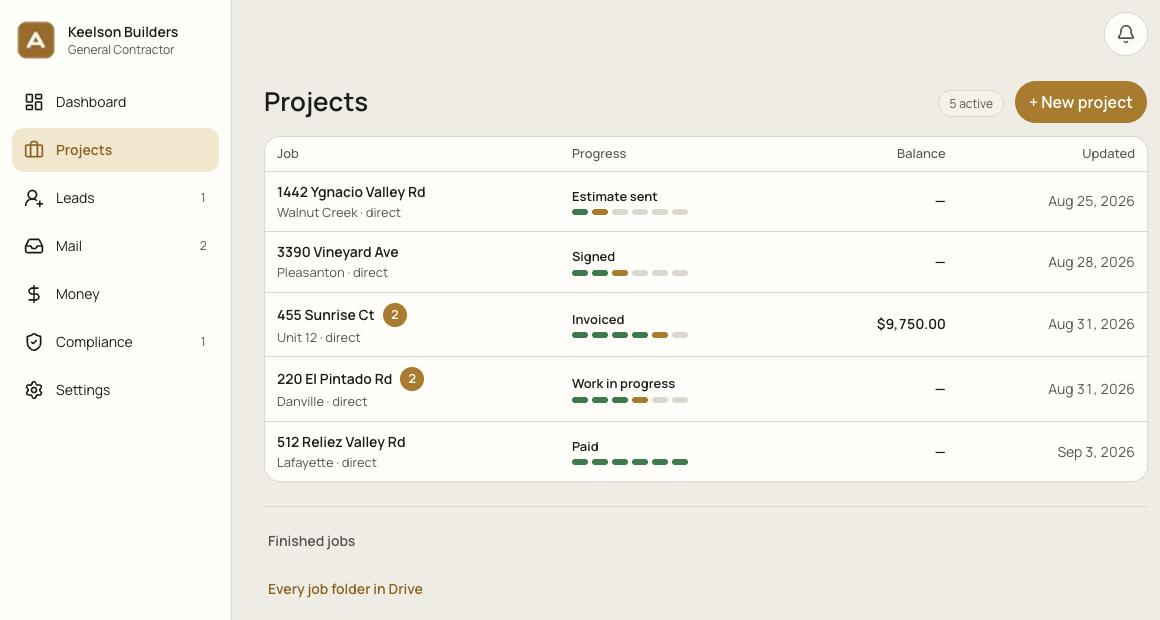
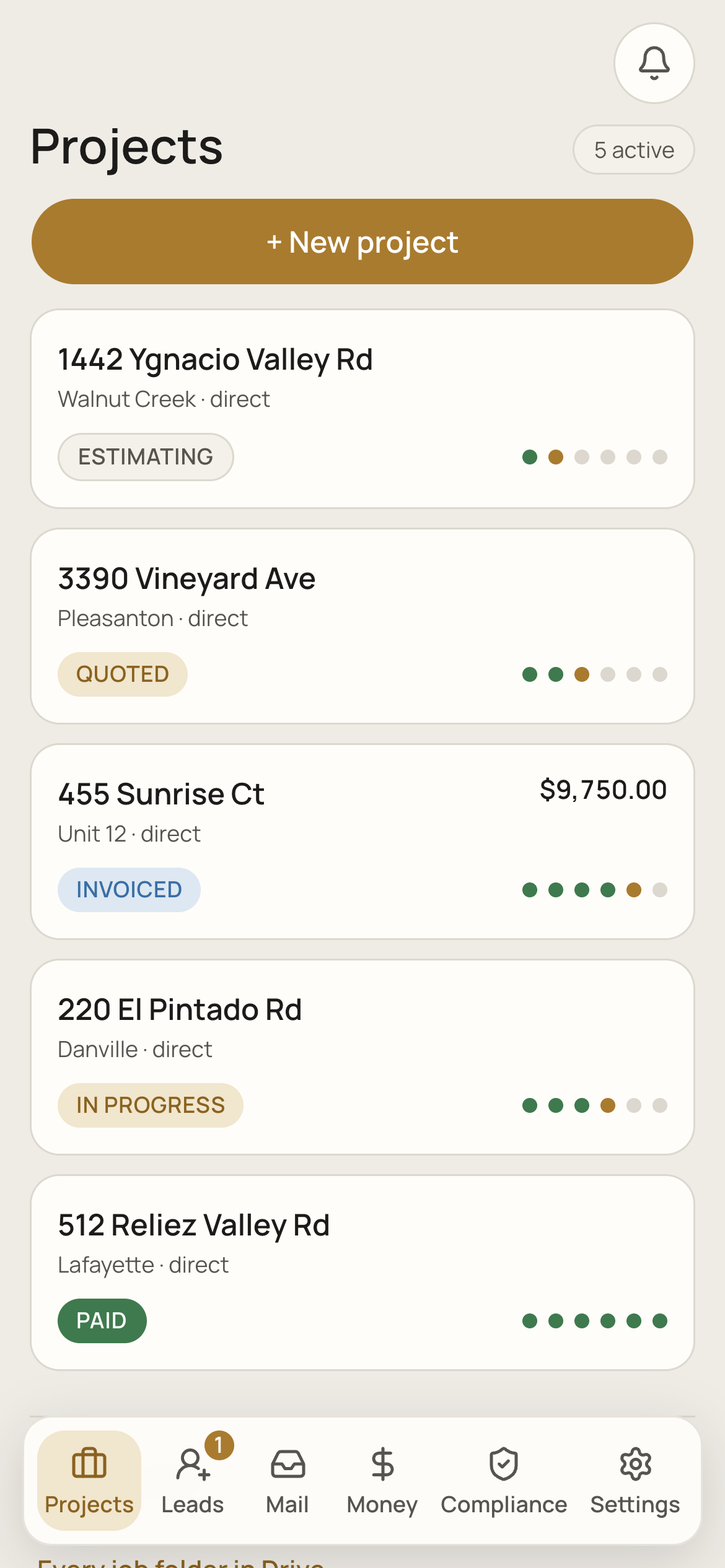
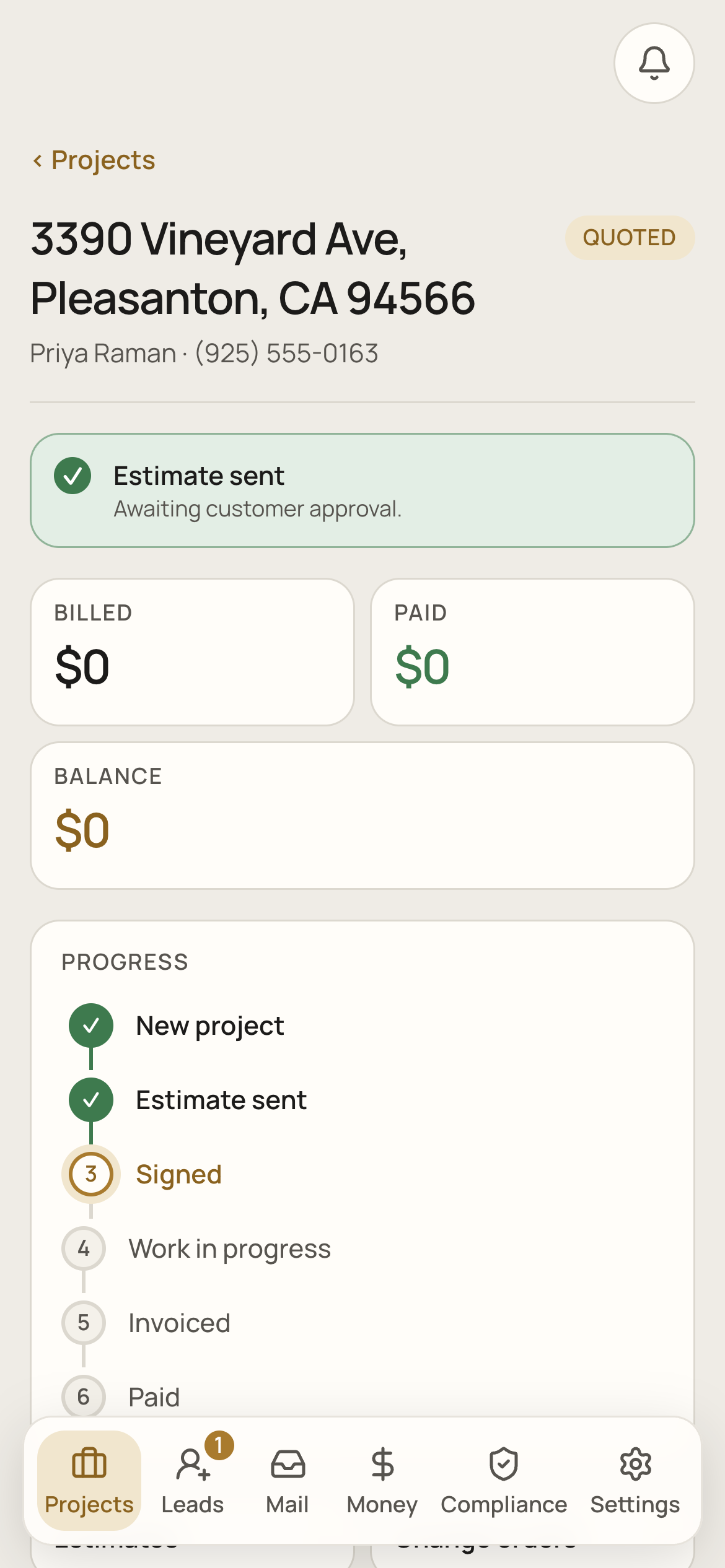
Every job, start to finish
Work arrives by phone, text, email and the form on the website. It lands in one list instead of one person’s head.
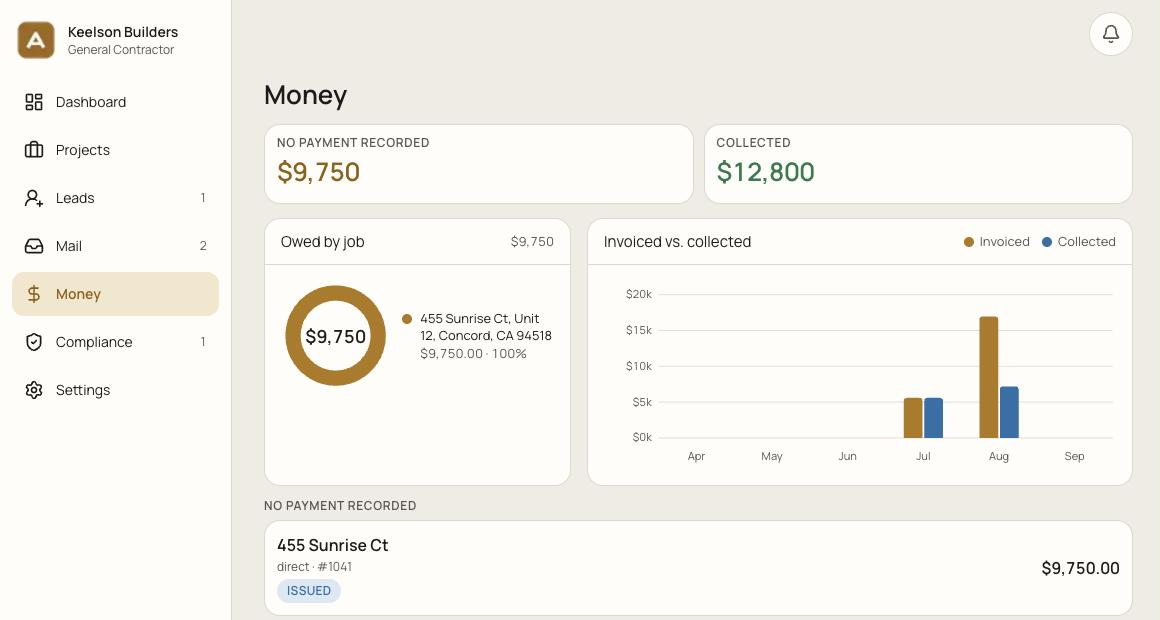
Who owes you what
Seven ways a payment gets recorded, all in one place. Invoices numbered in sequence. Nothing involving money goes out without a person approving it first.
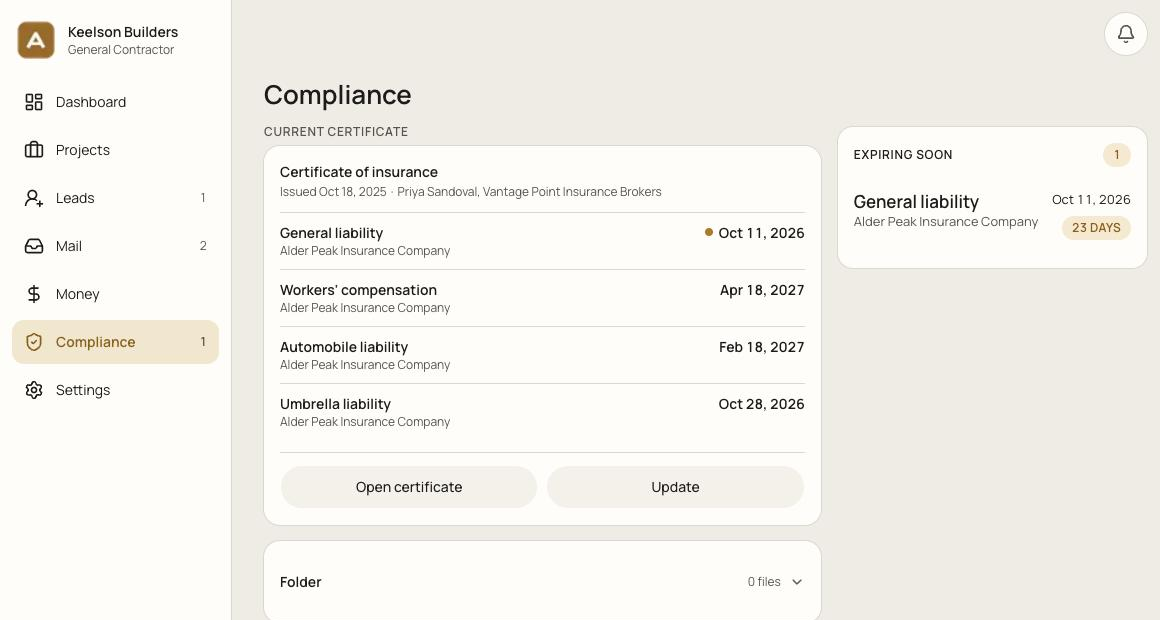
The certificate nobody remembered to renew
Every coverage line and every expiry date, read off the certificates themselves. A policy inside thirty days gets flagged before a client asks for it, not after.
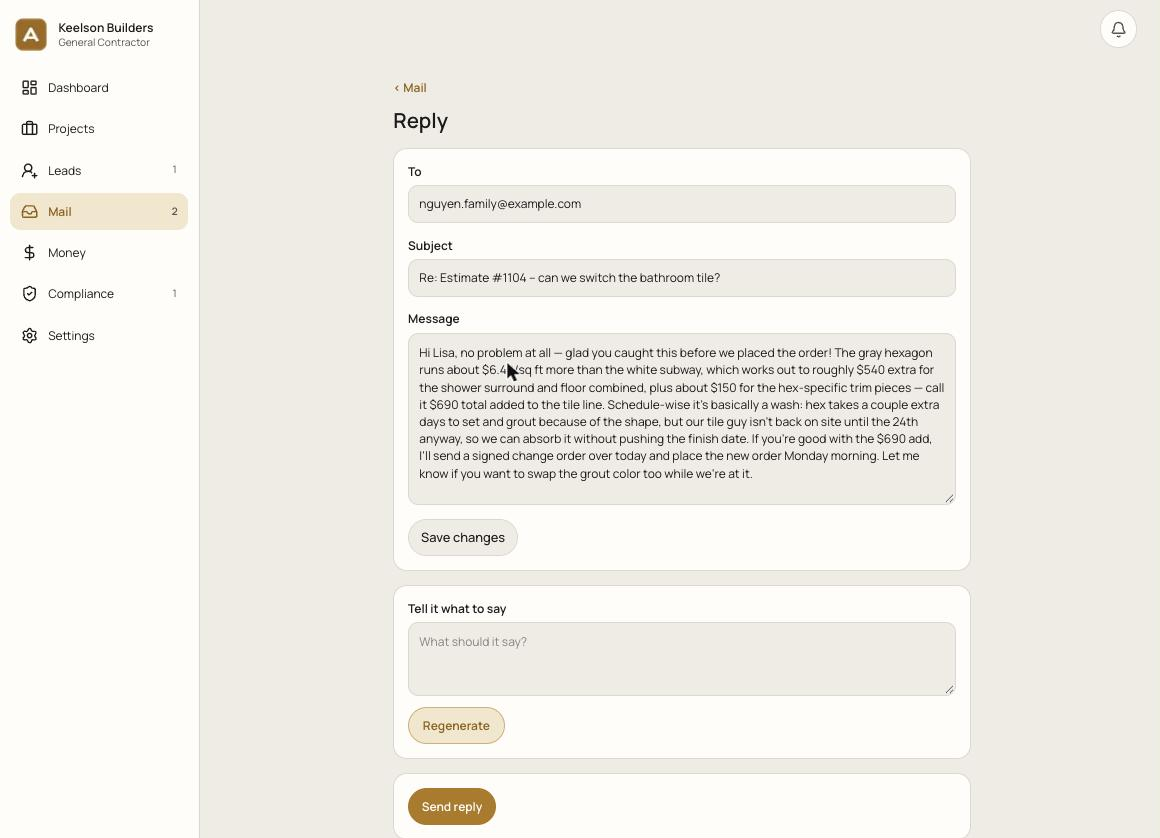
It writes. You decide.
A customer asks to change the tile. The system files the email to the job, works out what the change does to the price and the schedule, writes the answer — and leaves it sitting there. It will not send it. Only you do that.

Big type, big targets, and the numbers that matter on the first screen. The customer side needs no app and no account — they open a link and sign with a finger.

Every job

Billed, paid, owed

Signed with a finger
Not a chatbot bolted to the side. These are the places the system does the reading and the typing that used to happen at 10pm.
Point it at a supplier receipt or a scope document and the estimate lines come out itemised, ready to price.
From a few notes about the job, in the language the customer will actually read.
Pulls the carrier and the expiry for every coverage line, so the compliance list fills itself.
Takes a PDF that landed in the inbox and pulls out the facts that matter to the job.
Inbound mail gets triaged to the job it belongs to, with a one-line summary of what it is.
Unknown senders and spam leads get held before they reach the list of things you have to deal with.
Type three rough words. Get a professional email back, drafted and waiting.
The conversation about extra work becomes a priced, signable document.
Actions get verified before they fire, and spend runs against a hard budget gate.
It writes. You decide. Every reply is drafted and left sitting there, every payment is recorded by a person, and no document reaches a customer until somebody presses send.
The figures inside the screenshots are demo data. The four above are real.
I build these systems and I run them. When you call, you get me, not a support queue.
I grew up around this work. My father is a licensed general contractor in the Bay Area, and his company is where this was built and installed. It went live in July and he's taking it over now.
I'll tell you if I don't think I can help. I'd rather turn down a job than take one I'd do badly.
Nicholas Nuraliyev